Quantum-trained models,
molecular-dynamics scale.
I use quantum calculations (DFT) to train models of how atoms interact. Those models let me simulate thousands of atoms in spacecraft lubricants, molten salts and electrode interfaces. I compare predictions with experiments where measurements exist.
Open to Summer 2027 research internships and fellowships
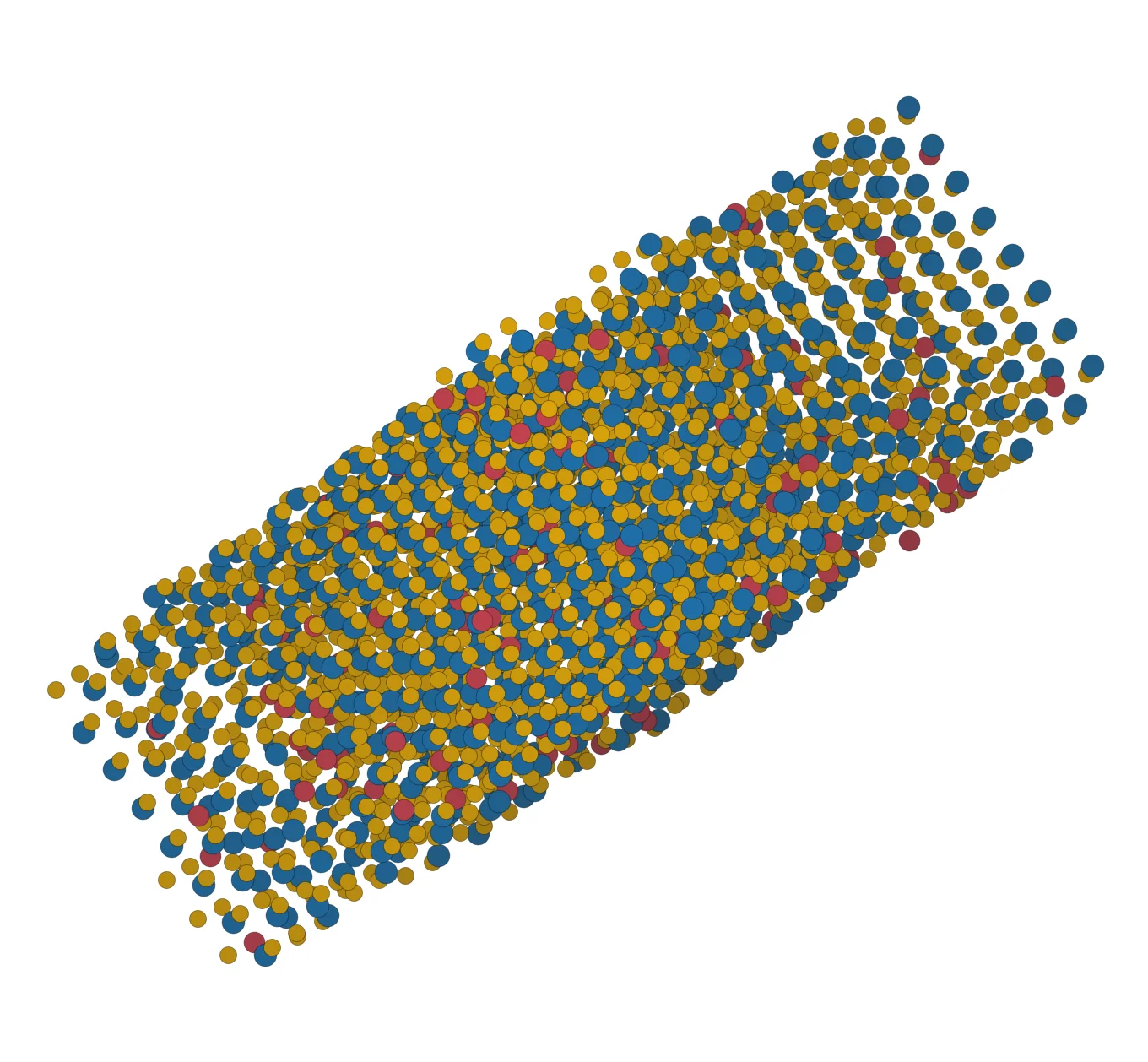
This simulation follows 3,111 atoms in copper-doped MoS₂ as the target temperature rises from 300 to 1,000 K over 20 picoseconds. JCTC 2026 · Drag or use the arrow keys to rotate.
Explore my work
Skills, tools & results
End-to-end pipelines: DFT data generation, ML potential training and fine-tuning, MD at scale on GPUs, and validation against experiment.
Research & publications
Three research threads, one goal: atomistic models you can trust for materials under real operating conditions.
- Machine-learning potentials Argonne + UC Merced
- MoS₂ lubricants for space with NASA JPL
- Electrochemical interfaces with LBNL and Argonne CNM
Selected projects
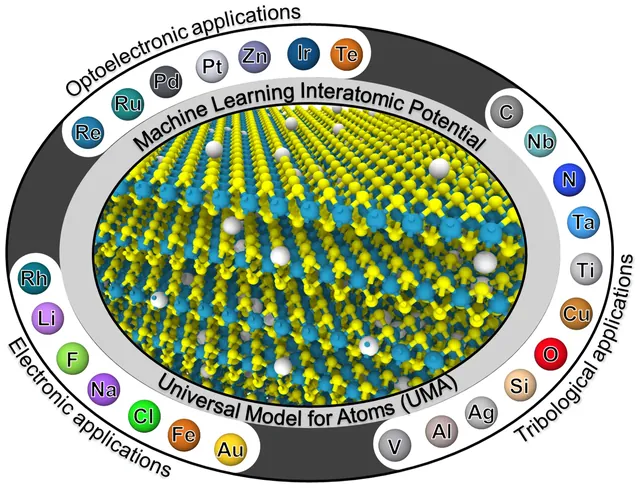
One ML potential, 25 dopants: where it works and where it fails
Meta's universal UMA model reproduced DFT dopant formation energies with a mean absolute error of 0.374 eV across 25 dopants. Heating simulations then showed copper clustering, sodium moving through the layers, and N₂ forming inside the lattice.
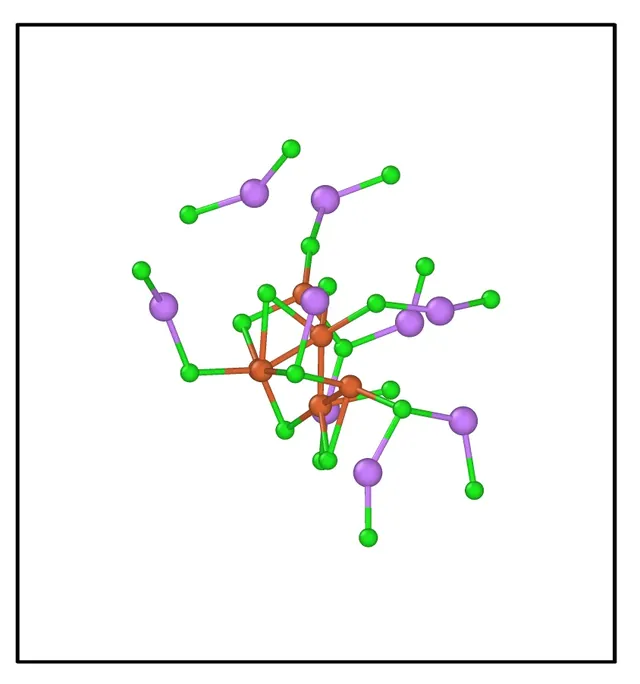
Fixing a foundation model's iron clustering in molten salt
A foundation model put iron ions into persistent clusters in molten LiCl–FeCl₂. Fine-tuning removed the artifact, and the corrected liquid structure was compared with X-ray diffraction.
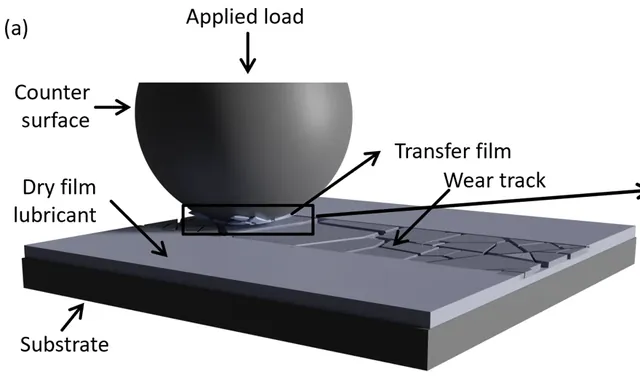
Why MoS₂ space lubricants wear out in the cold
Measurements showed shorter lubricant life below room temperature. Simulations linked smaller MoS₂ flakes to greater water susceptibility and poorer sliding alignment.
How well does UMA predict dopant formation energies?
Choose a dopant to compare the model’s formation-energy error against quantum calculations at three sites in MoS₂.
Swipe to see more elements.
Loading data…
Could not load the dopant data. See Figure 4 in the JCTC case study.
Recent experience
Guest Facility User
Evaluating ML interatomic potentials for electrochemical interfaces relevant to next-generation battery and catalysis materials.
Research Aide Technical – PhD
Built the data, training, and simulation pipelines for ML force fields of molten salts on leadership-class supercomputers.
Visiting Scholar
Measured temperature-dependent friction and wear of MoS₂ dry-film lubricants and linked the measurements to simulations.
Open to Summer 2027 research internships and fellowships
Atomistic modeling, ML interatomic potentials, and HPC workflow roles in industry R&D and national laboratories. Enrolled at a U.S. university through Fall 2027.