The problem
Dopants change MoS₂ properties, but simulation potentials are unavailable for many compositions. A general model needs validation before its predictions guide materials screening.
What I did
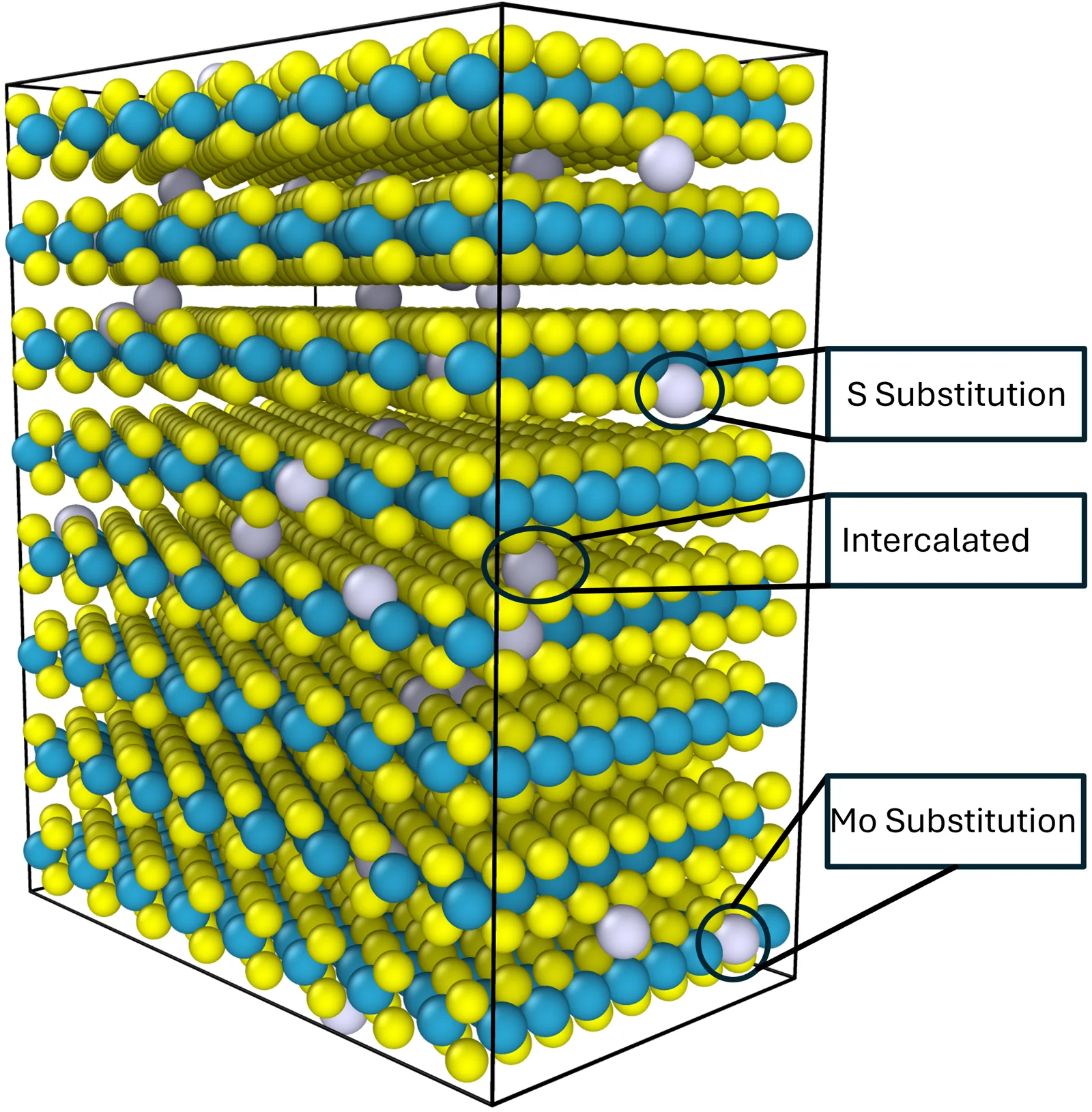
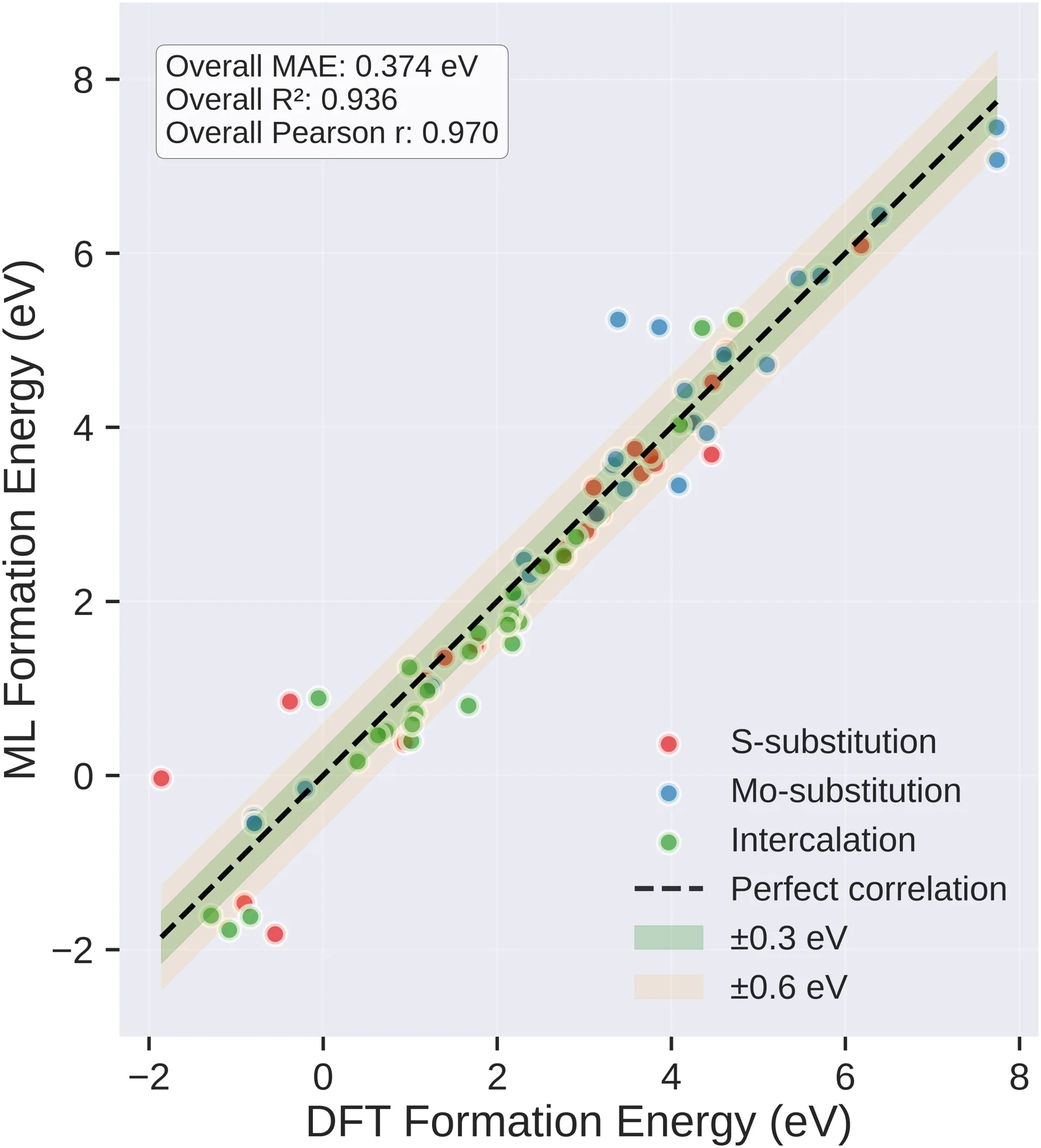
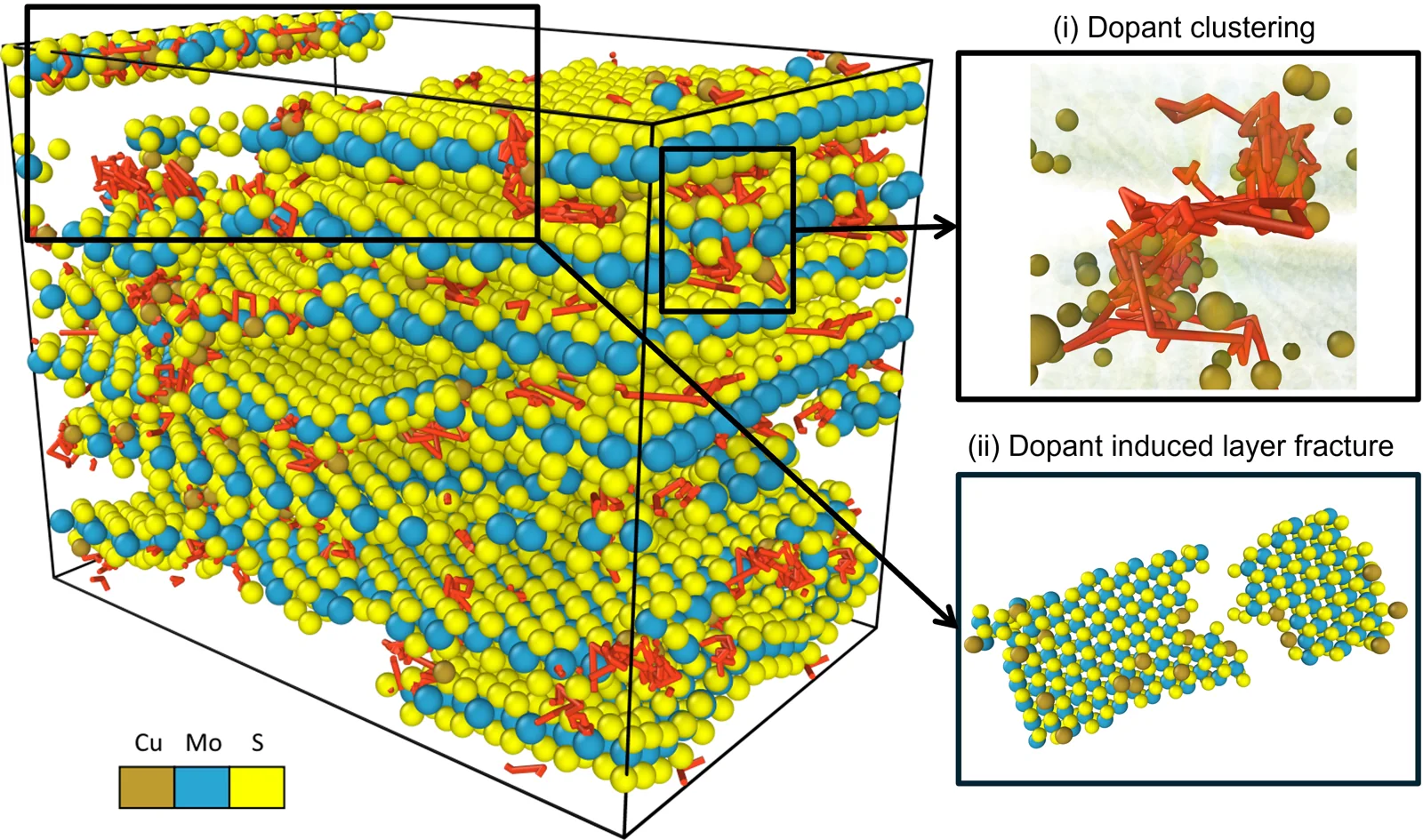
The study compared UMA formation energies and structural changes with density functional theory calculations. UMA small then simulated heating and cooling of doped MoS₂.
UMA small had a lower average absolute error than UMA medium against DFT on the paper's dataset.
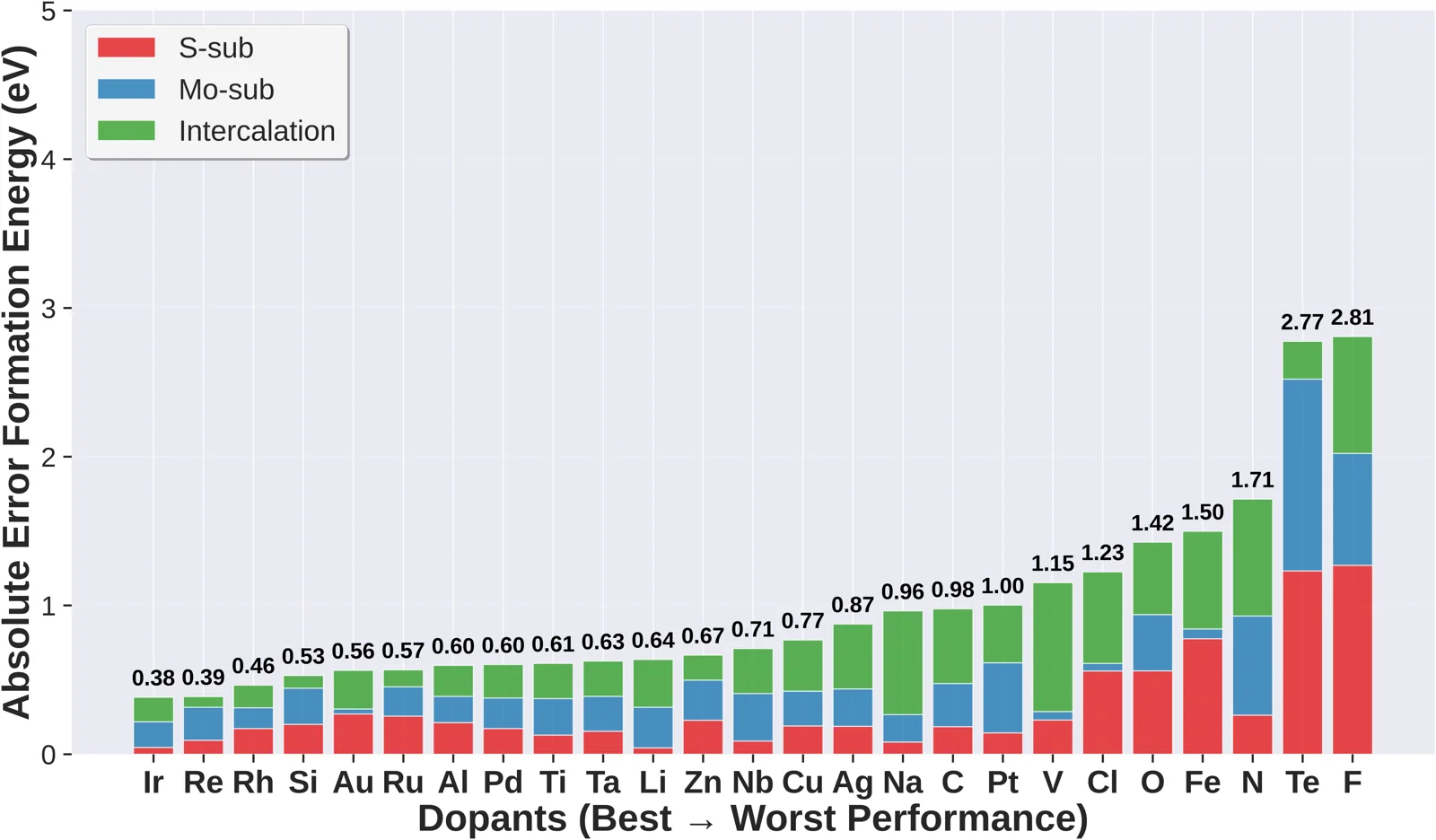
The errors describe sulfur substitution, molybdenum substitution, and intercalation, respectively; model accuracy varied with dopant position.
Summed absolute error across the three sites ranges from 0.38 eV (Ir) to 2.81 eV (F).
What we found
- UMA small formation-energy mean absolute errors were 0.377 eV for sulfur substitution, 0.360 eV for molybdenum substitution, and 0.326 eV for intercalation.
- Overall formation-energy mean absolute error was 0.374 eV for UMA small and 0.404 eV for UMA medium.
- Summed absolute error across the three sites ranges from 0.38 eV (Ir) to 2.81 eV (F).
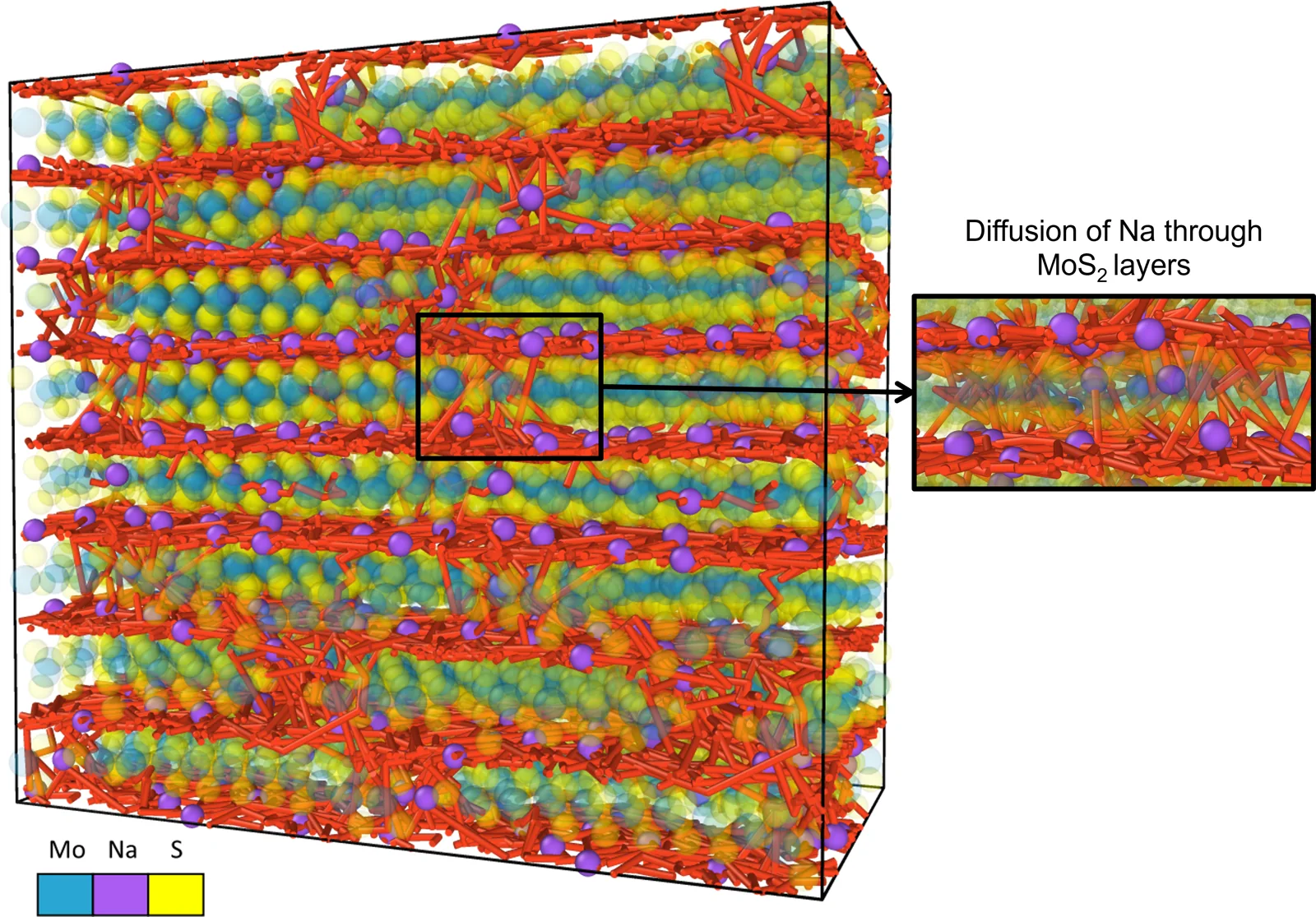
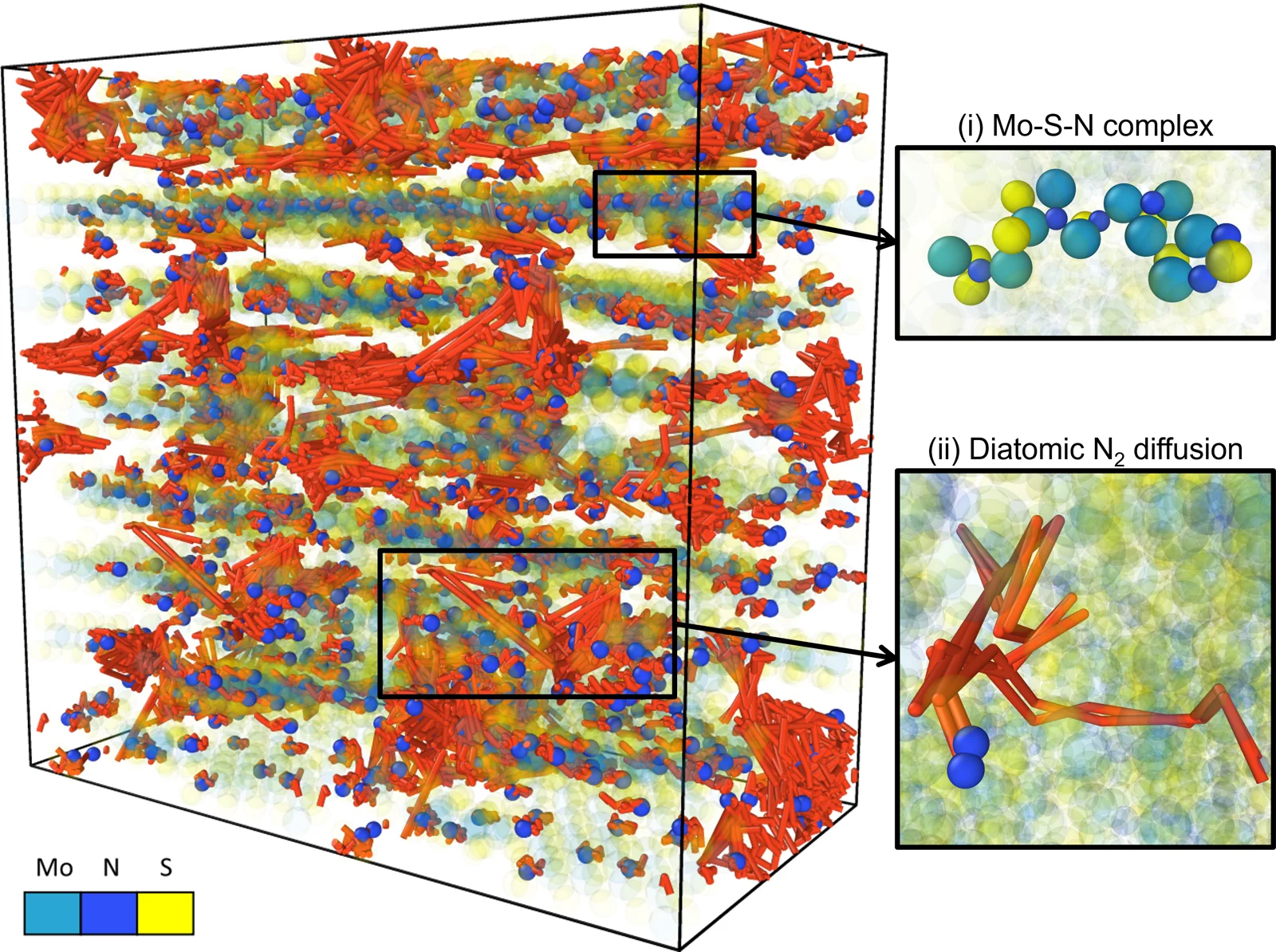
- Heating and cooling simulations showed copper clustering, sodium diffusion between and through layers, and formation of nitrogen molecules.
Figures
Why it matters
The benchmark helps researchers decide where UMA needs further validation before screening doped MoS₂ materials.
Recreate it yourself. Build doped MoS₂ cells, relax them with an ML potential, compute dopant formation energies, then heat a doped bilayer and watch the dopants move. Open the tutorial →
Next case study · Why MoS₂ space lubricants wear out in the cold → · Back to Machine-learning potentials research