MoS₂ dry-film lubricants can lose wear life below room temperature. Space mechanisms need lubricants that work across cold operating conditions.
What I did
Tribometer measurements tested lubricant wear life. Reactive molecular dynamics with ReaxFF in LAMMPS examined fracture, water adsorption, and sliding of different-sized MoS₂ flakes.
What we found
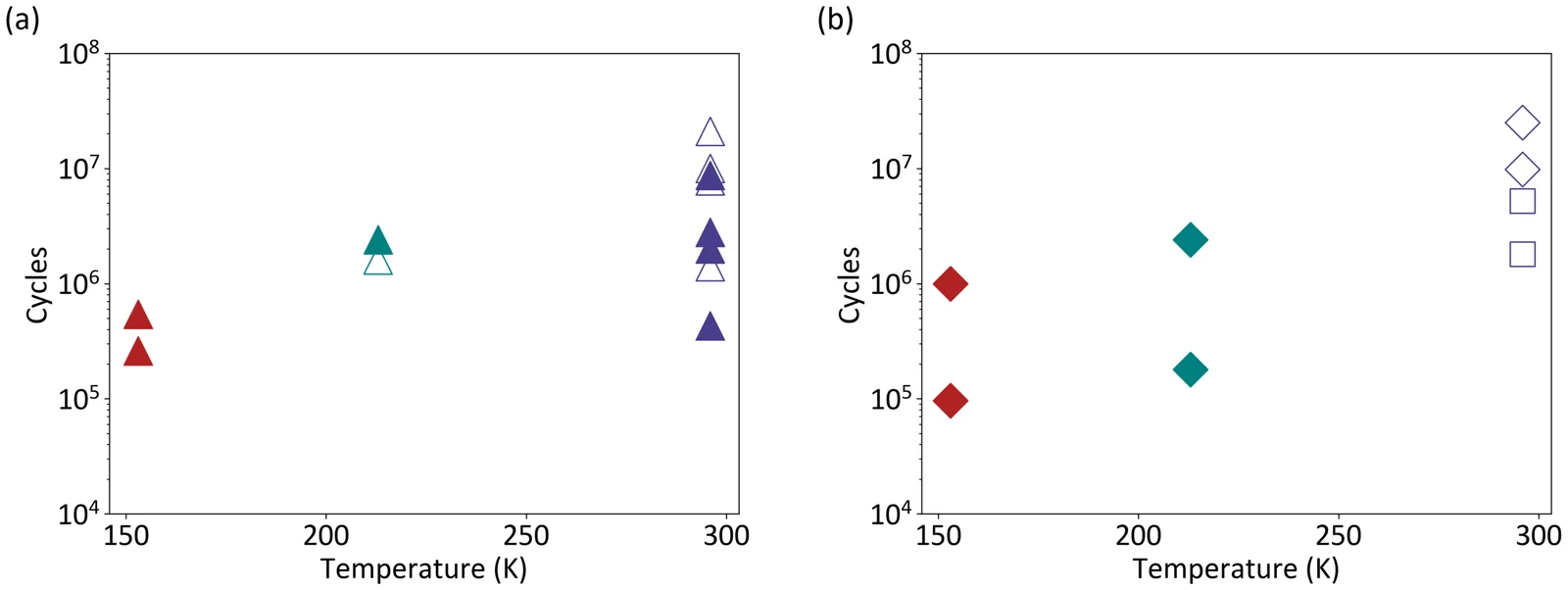
Tribometer measurements showed poorer lubricant wear life below room temperature.
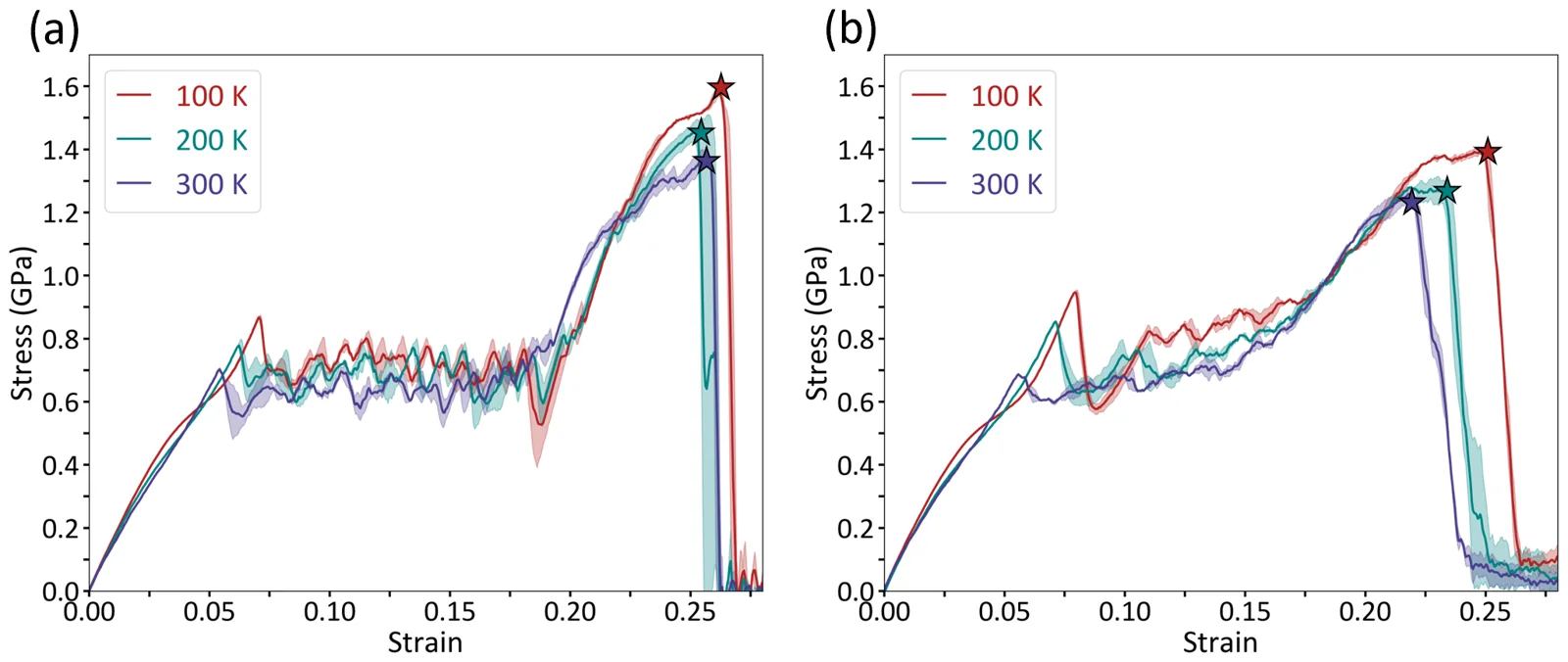
Fracture simulations provided a mechanism for forming smaller flakes at low temperature.
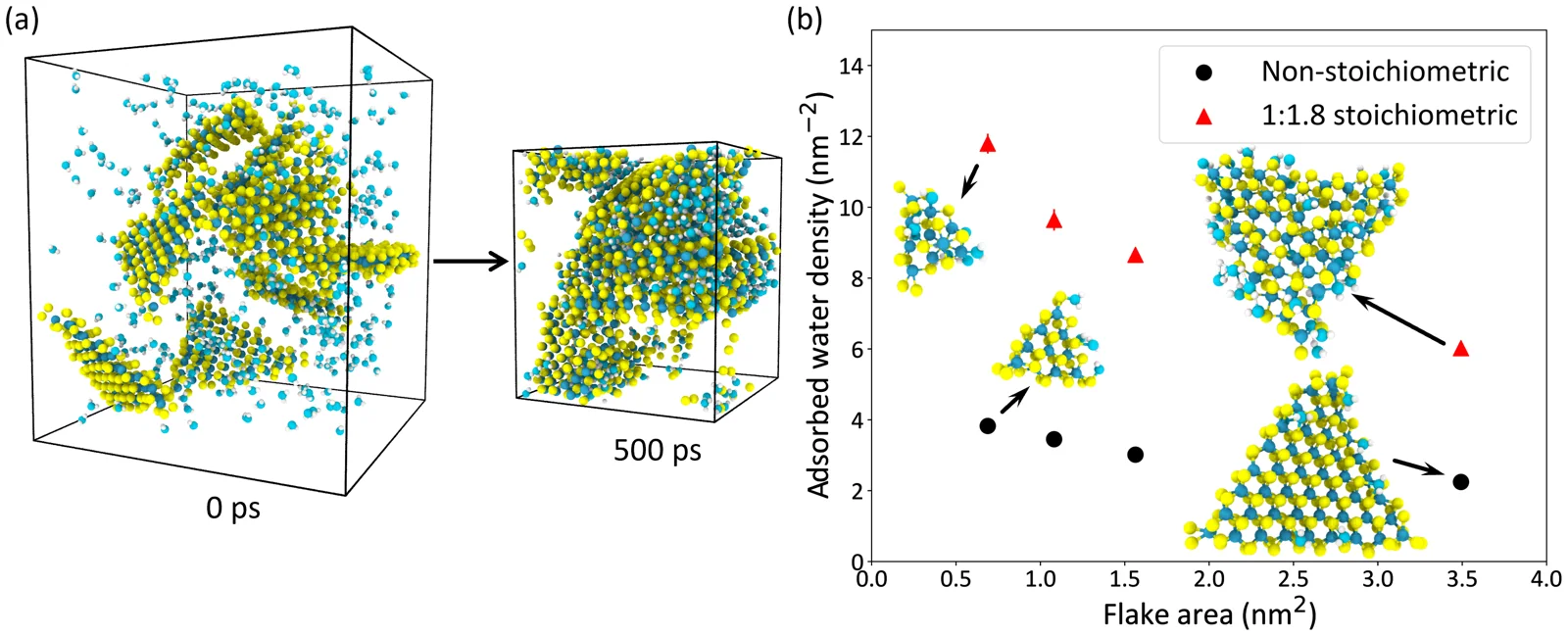
Smaller simulated flakes were more susceptible to water adsorption.
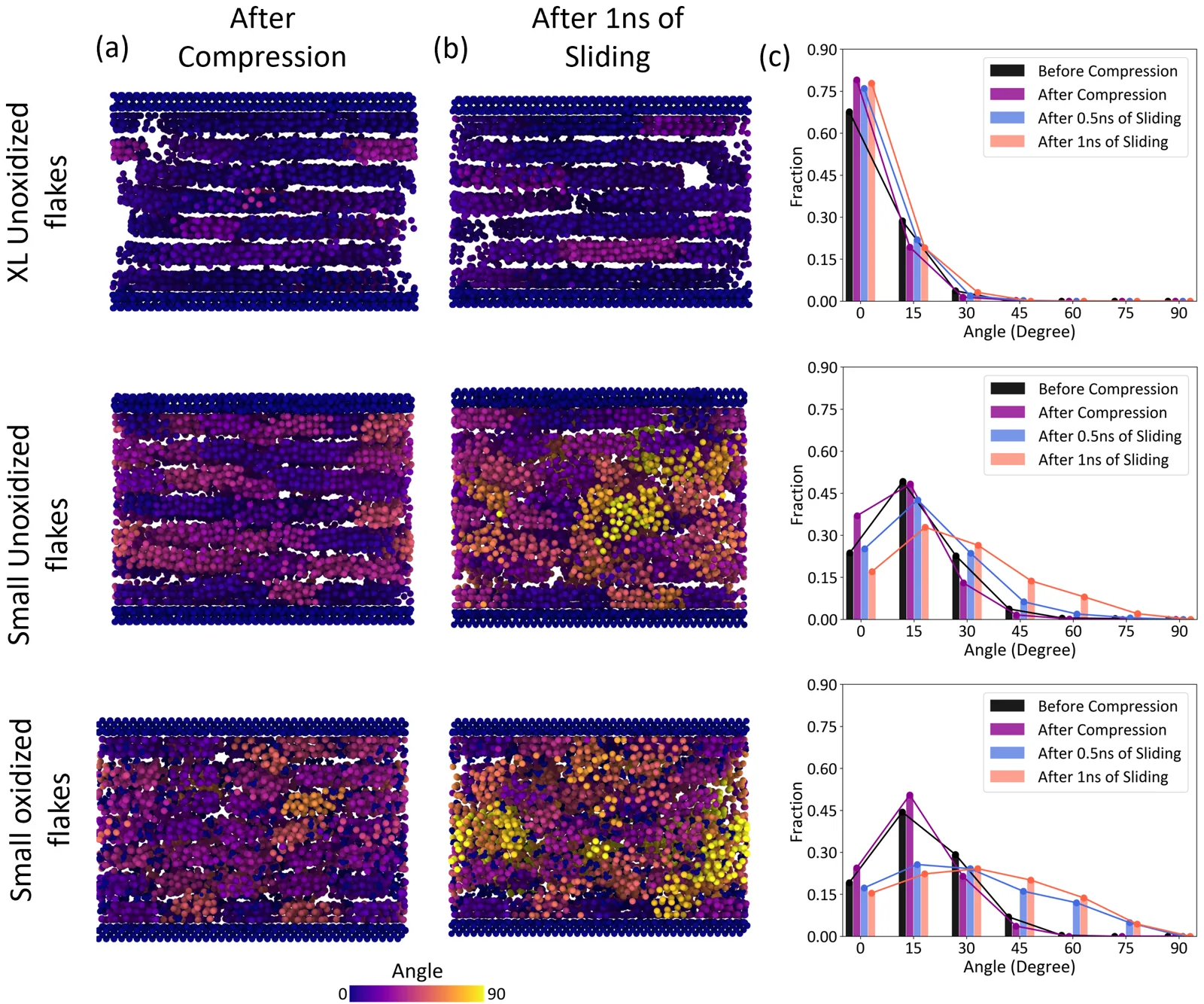
Smaller flakes aligned less readily with sliding and were less lubricious even without water.
Figures
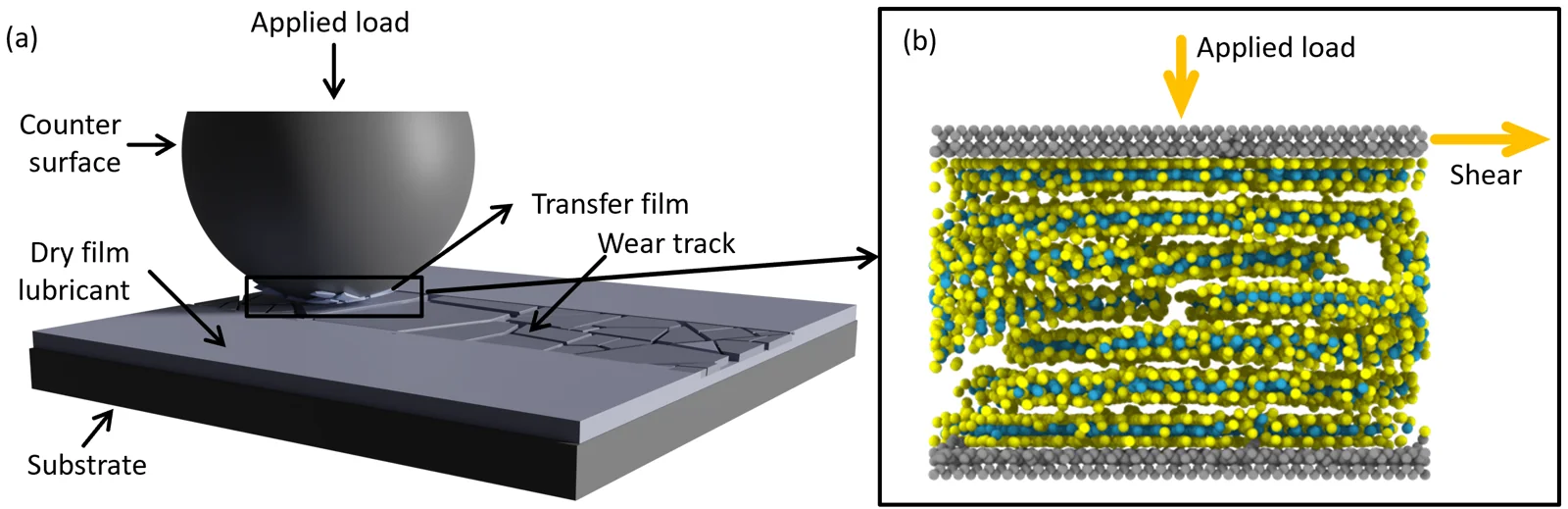
From tribometer to atoms. Left: a ball slides on a coated surface and breaks off MoS₂ flakes. Right: the reactive MD model of flakes sheared between two walls.
Wear life drops in the cold. Tribometer tests at NASA JPL: sliding cycles to coating failure vs temperature at 350 MPa (a) and 800 MPa (b) contact pressure.
Cold MoS₂ fails at higher stress. Monolayer MoS₂ stretched along armchair (a) and zigzag (b) directions at 100, 200, and 300 K. Stars mark failure. This temperature dependence offers a route to smaller wear debris in the cold.
Small flakes take up more water. (a) Extra-large flakes before and after 500 ps in water vapor. (b) Adsorbed water per nm² vs flake area, for sulfur-edged and stoichiometric flakes. Smaller flakes adsorb more.
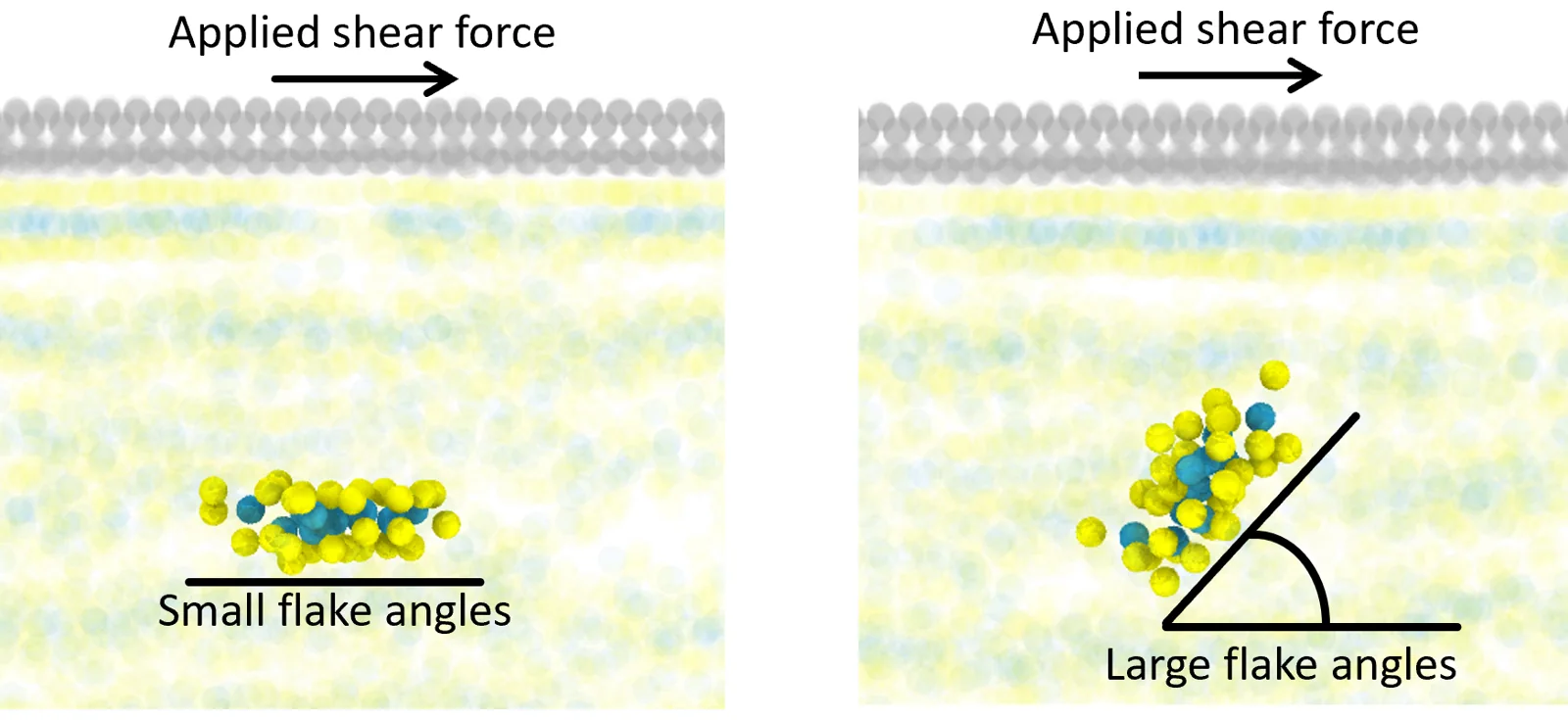
Measuring flake tilt. The angle between one flake and the shear direction. A small angle means the flake lies flat, parallel to sliding.
Small and oxidized flakes stay tilted. Flakes colored by angle after compression and after 1 ns of sliding, with angle histograms. Once sliding starts, angles grow for small and oxidized flakes but not for extra-large ones.
Why it matters
The findings guide tests of lubricant coatings and debris behavior for cold spacecraft mechanisms.
Recreate it yourself. Pull a monolayer MoS₂ sheet apart at 100, 200 and 300 K with an ML potential, and measure flake tilt with a PCA method. Open the tutorial →